
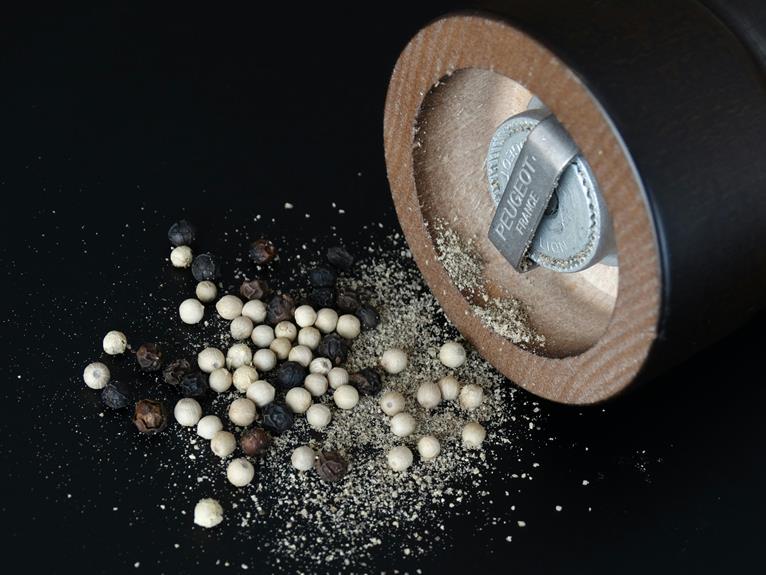
You're about to discover why Tellicherry pepper is crowned the king of black peppercorns, boasting a rich history, distinct flavor profile, and unparalleled aroma that has captivated the senses of spice connoisseurs for centuries. Originating from the Malabar Coast in India, Tellicherry pepper has been a staple in Indian cuisine and trade for centuries. Its unique flavor profile, with hints of sweetness and fruity undertones, sets it apart from other pepper varieties. With its rich history, versatility in culinary applications, and expert cultivation process, Tellicherry pepper is the ultimate choice for those seeking the perfect blend of flavor and sophistication. Now, take a step closer to revealing the secrets of this majestic spice.
Key Takeaways
- Tellicherry pepper originates from the Malabar Coast, where its unique soil, climate, and altitude create perfect conditions for cultivation.
- This pepper has a rich, slightly sweet aroma balanced by a sharp, pungent flavor profile with complex undertones and fruity nuances.
- Skilled farmers in Kerala cultivate and harvest Tellicherry pepper using sustainable farming practices, sun-drying the peppers to preserve natural oils.
- Tellicherry pepper is a versatile spice that elevates dishes with its distinctive pungency and subtle fruit notes, pairing well with bold flavors and ingredients.
- To ensure freshness and authenticity, verify the supplier's reputation, look for direct relationships with farmers, and store the pepper in a cool, dry place.
Origins of Tellicherry Pepper
India's Malabar Coast, a region renowned for its rich cultural heritage and spice trade, is where Tellicherry pepper originates from.
As you explore the history of this prized spice, you'll discover its deep cultural significance. Tellicherry pepper has been an integral part of Indian cuisine and trade for centuries, with its production and export shaping the region's economy.
You'll find that the pepper is grown in the southwestern states of India, particularly in Kerala, where the unique combination of soil, climate, and altitude creates the perfect conditions for its cultivation.
As you examine the regional variations of Tellicherry pepper, you'll notice distinct differences in flavor, aroma, and quality.
The pepper is named after the Tellicherry port, which was a major hub for spice trade in the 16th century.
The regional variations are a result of the different cultivation practices, soil types, and climatic conditions found in various regions.
You'll find that each region produces pepper with unique characteristics, making Tellicherry pepper a truly special and sought-after spice.
Flavor Profile and Aroma
As you savor the complex flavors of Tellicherry pepper, you'll discover a rich, slightly sweet aroma that's balanced by a sharp, pungent flavor profile.
This unique blend of flavors is a result of the pepper's slow maturation process, which allows it to develop a deeper, more refined taste.
When you take a closer look, you'll notice complex undertones that add depth and character to the pepper's flavor.
These undertones are subtle, yet distinct, and they work in harmony with the pepper's natural pungency to create a truly unique taste experience.
One of the most striking aspects of Tellicherry pepper is its fruity nuances, which add a hint of sweetness to its flavor profile.
These fruity notes are subtle, but they're an essential part of what makes Tellicherry pepper so special.
They add a layer of complexity to the pepper's flavor, making it perfect for a wide range of dishes.
Whether you're using it to add depth to a sauce or to add a burst of flavor to a stir-fry, Tellicherry pepper is sure to impress.
Growing and Harvesting Process
Your journey to understand the intricacies of Tellicherry pepper takes you to the lush hills of Kerala, where skilled farmers carefully cultivate and harvest this prized pepper variety.
As you explore the rolling hills, you notice the farmers' focus on climate resilience, ensuring their crops can thrive in the region's tropical climate. They achieve this by adopting sustainable farming practices, such as crop rotation and organic fertilizers, which also promote soil conservation.
As the pepper plants grow, they're trained to climb up wooden stakes or trees, allowing for better air circulation and sunlight penetration. This labor-intensive process requires precision and patience, but the end result is well worth it.
When the peppers are ripe, they're hand-picked by farmers who carefully select the best ones for harvesting. The berries are then left to dry in the sun, turning from green to black as they lose moisture.
This traditional method of sun-drying preserves the pepper's natural oils, resulting in the distinctive flavor and aroma that Tellicherry pepper is renowned for.
History of Tellicherry Pepper Trade
The ancient port city of Tellicherry, nestled on the Malabar Coast, served as a bustling hub for spice traders, who for centuries exported this prized pepper variety to distant lands.
You can imagine the aroma of Tellicherry pepper wafting through the air as ships docked, laden with goods from far-off lands.
The Portuguese colonization of India in the 16th century marked a significant turning point in the history of Tellicherry pepper trade.
The Portuguese established maritime routes that connected Tellicherry to major trading centers in Europe, Africa, and Asia.
This led to a surge in demand for Tellicherry pepper, and it became a highly sought-after commodity.
As trade flourished, Tellicherry pepper found its way into the kitchens of royal courts and aristocratic households across the globe.
You're likely aware that the pepper's popularity wasn't limited to just culinary uses; it was also used as a form of currency in some regions.
The maritime routes established during this period played a pivotal role in shaping the global pepper trade, with Tellicherry pepper emerging as a leader in the industry.
Culinary Uses and Pairings
Flavors of Tellicherry pepper elevate dishes with its distinctive pungency and subtle fruit notes, making it a versatile spice for a wide range of culinary applications.
When you use Tellicherry pepper, you'll find it pairs well with bold flavors like garlic, ginger, and onions, making it a staple in Indian and Asian cuisines.
You can add it to spice blends like garam masala, curry powder, or Chinese five-spice to create complex flavor profiles.
Tellicherry pepper is also a great addition to marinades, sauces, and braising liquids, as it enhances the natural flavors of meats, poultry, and seafood.
You'll find it's particularly well-suited to beef, lamb, and game meats, where its bold flavor won't get lost.
In vegetarian and vegan dishes, Tellicherry pepper adds depth to legumes, grains, and roasted vegetables.
Whether you're cooking up a hearty stew or a simple stir-fry, Tellicherry pepper's unique flavor profile will elevate your dishes to the next level.
Comparison to Other Pepper Varieties
One thing you might wonder is how Tellicherry pepper stacks up against its pepper peers in terms of flavor profile and heat level. As you explore the pepper hierarchy, you'll find that Tellicherry peppers occupy a unique spot in the flavor spectrum.
Malabar pepper is slightly sweeter and less pungent than Tellicherry, with a more delicate flavor profile.
Sarawak pepper is milder and more aromatic, with a fruity and slightly sweet flavor.
Vietnamese pepper is sharper and more bitter, with a robust, earthy flavor.
Kashmiri pepper is sweeter and more delicate, with a subtle, slightly smoky flavor.
When it comes to heat level, Tellicherry peppers fall somewhere in the middle, with a moderate Scoville heat unit (SHU) rating. While they're not the hottest peppers out there, they pack a decent punch.
Health Benefits and Nutrition
You can reap several health benefits from incorporating Tellicherry pepper into your diet, thanks to its rich nutritional profile.
As a rich source of antioxidants, Tellicherry pepper helps protect your body from free radicals, which can cause cell damage and lead to chronic diseases. Its antioxidant properties also help reduce inflammation, promoting overall health and well-being.
Tellicherry pepper is also an excellent digestive aid.
It stimulates digestive enzymes, helping your body break down food more efficiently. This can lead to improved nutrient absorption, reduced bloating, and a lower risk of digestive disorders. Additionally, the pepper's piperine content helps increase the bioavailability of nutrients, making it an excellent addition to your meals.
Incorporating Tellicherry pepper into your diet can also help boost your immune system, thanks to its high vitamin C content.
It's also a good source of fiber, copper, and iron, making it a nutritious and flavorful addition to your meals. By adding Tellicherry pepper to your diet, you can experience these health benefits and more, making it a great way to spice up your meals and improve your overall health.
Sourcing and Storage Tips
Two key factors that can significantly impact the quality and potency of Tellicherry pepper are where you source it from and how you store it.
When it comes to sourcing, you want to verify you're getting your Tellicherry pepper from a reputable supplier that can guarantee freshness and authenticity. Look for vendors that have direct relationships with farmers or have a transparent supply chain.
Proper storage is just as vital in maintaining the pepper quality.
Store your Tellicherry pepper in a cool, dry place, away from direct sunlight and moisture.
Use airtight containers made of glass, ceramic, or stainless steel to prevent air and light from affecting the pepper's flavor and aroma.
Avoid storing pepper near strong-smelling spices or foods, as they can absorb odors easily.
Keep your containers clean and dry to prevent mold and bacterial growth.
Frequently Asked Questions
Can I Grind Tellicherry Peppercorns in a Regular Pepper Mill?
You can grind Tellicherry peppercorns in a regular pepper mill, but they'll likely produce a coarse grind. For a finer grind, consider using electric mills specifically designed for peppercorns, which will bring out their unique flavor and aroma.
Are Tellicherry Peppercorns Suitable for People With Pepper Allergies?
You might think pepper allergies are a deal-breaker, but don't worry, you can still enjoy Tellicherry peppercorns! If you're concerned about pepper sensitivity, consider allergy testing to determine your tolerance level before incorporating them into your diet.
Can I Use Tellicherry Pepper as a Substitute for White Pepper?
You're wondering if you can swap tellicherry pepper for white pepper. While both have distinct pepper profiles, tellicherry's robust, slightly sweet flavor won't replicate white pepper's mild, creamy taste, so it's not a perfect substitute in flavor comparisons.
How Long Do Tellicherry Peppercorns Retain Their Flavor and Aroma?
You'll be surprised to know that peppercorns can stay fresh for up to 3-4 years! When storing Tellicherry peppercorns, you'll preserve their complex flavor profile by keeping them away from heat, light, and moisture, ensuring their aroma and flavor remain vibrant for a longer period.
Are Tellicherry Peppercorns More Expensive Than Other Black Peppercorns?
You'll find that Tellicherry peppercorns generally cost more than other black peppercorns due to their superior flavor and aroma, which justifies the higher price, making them a worthwhile investment for flavor enthusiasts.
Conclusion
As you hold the Tellicherry pepper in your hand, you're grasping a piece of history, a flavor bomb waiting to explode.
Like a master key, it reveals the secrets of your favorite dishes, elevating them to new heights.
As the aroma wafts up, you're transported to the sun-kissed hills of India, where the pepper's journey began.
Savor the taste, and you'll understand why Tellicherry pepper is the king of black peppercorns, reigning supreme in the world of spices.