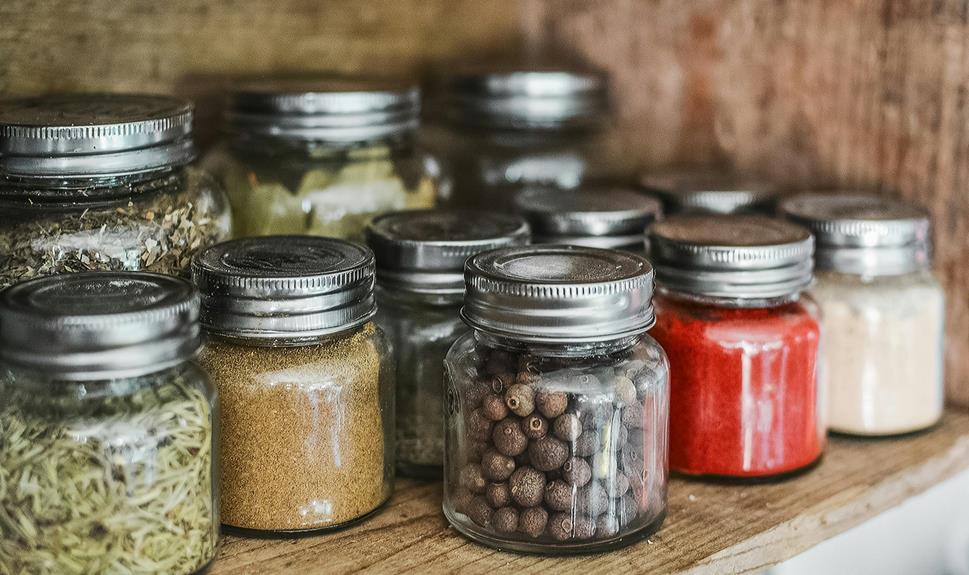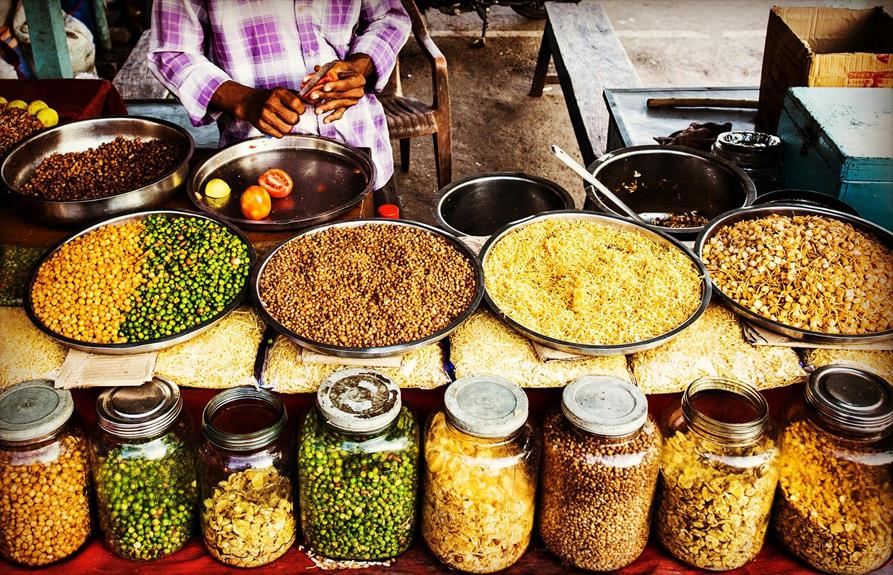
You'll need a mix of warm, aromatic, earthy, and specialty spices to create authentic Indian dishes. Essential warm spices like turmeric, cumin, coriander, cinnamon, and cardamom add depth and comfort. Aromatic spices like cloves, fennel, and nutmeg enhance flavors, while earthy spices like cumin, coriander, and turmeric bring savory depth. Keep common whole spices like cardamom, cinnamon sticks, and cloves on hand for everyday cooking. Finally, explore specialty spices like curry leaves, fenugreek seeds, and asafoetida to add regional flair. Now, discover how to balance and blend these spices to uncover the rich flavors of India.

Key Takeaways

  • Cardamom, cinnamon sticks, and cloves are essential whole spices found in many Indian households for everyday cooking and added flavor.
  • Earthy spices like cumin, coriander, and turmeric provide depth and complexity to Indian dishes, evoking the rich fertile soil of India's countryside.
  • Aromatic spices like cardamom, cloves, and fennel enhance flavors and aromas, adding sweetness, warmth, and freshness to Indian cuisine.
  • Specialty spices like curry leaves, fenugreek seeds, and asafoetida add regional flair and distinct flavors to southern Indian and other regional dishes.
  • Having a variety of whole spices on hand allows for flexibility in creating unique spice blends and seasonings, ensuring authentic Indian flavors.

Essential Warm Spices for Depth

When crafting the foundation of Indian dishes, you'll often reach for essential warm spices that add depth and complexity to your recipes.

These spices, commonly used in Spice Blending, create a rich and inviting flavor profile. Turmeric, cumin, coriander, and cinnamon are staples in Indian cooking, each with its unique heat level and character.

Turmeric adds a bright, earthy flavor, while cumin provides a warm, slightly bitter taste. Coriander contributes a sweet, citrusy note, and cinnamon adds a warm, comforting aroma.

When combining these spices, you must balance their Heat Levels to achieve harmony in your dishes.

For instance, if you're making a spicy curry, you may want to tone down the heat with a cooling spice like cumin. Conversely, if you're preparing a mild dish, a pinch of cayenne pepper can add a welcome kick.

By mastering the art of Spice Blending and understanding the nuances of Heat Levels, you'll be able to craft Indian dishes that are both authentic and delicious.

With practice, you'll develop your own signature blends, elevating your cooking to new heights.

Aromatic Spices for Flavor Enhancement

Five aromatic spices – cardamom, cloves, fennel, nutmeg, and star anise – are essential for adding a new dimension of flavor to your Indian dishes.

These spices are known for their distinct flavor profiles, which can elevate even the simplest of recipes.

When combining these spices, you'll discover the art of spice blending, where the whole is greater than the sum of its parts.

Cardamom, with its sweet and minty notes, pairs beautifully with the warm, pungent flavor of cloves.

Fennel, with its anise-like flavor, complements the sweetness of nutmeg, while star anise adds a subtle licorice flavor.

By blending these spices, you'll create complex and intriguing flavor profiles that will take your Indian dishes to the next level.

Experiment with different ratios and combinations to find the perfect blend for your recipes.

Remember, the key to successful spice blending is balance and restraint, so start with small amounts and adjust to taste.

With these aromatic spices, you'll discover the secrets of authentic Indian cuisine.

Earthy Spices for Savory Dishes

You'll add depth and umami flavor to your savory Indian dishes with earthy spices like cumin, coriander, and turmeric, which evoke the rich, fertile soil of India's countryside.

These earthy spices bring a sense of grounding to your meals, reminiscent of the country's vast agricultural lands.

Cumin, in particular, adds a warm, earthy flavor that's essential in many Indian recipes. Its soil undertones are unmistakable, and when combined with coriander, it creates a harmonious balance of flavors.

Turmeric, with its vibrant yellow color, adds a subtle bitterness and a hint of mushroom umami that complements the richness of meat or vegetable-based dishes.

When used together, these earthy spices will elevate your Indian dishes, giving them a complexity and authenticity that's hard to achieve with other spices.

Common Whole Spices in Indian Kitchens

Indian kitchens typically stock a set of essential whole spices that form the backbone of everyday cooking, with cardamom, cinnamon, and cloves being staples in many households.

You'll often find these spices in most Indian recipes, adding depth and warmth to dishes.

Having these whole spices on hand allows you to create a variety of spice blends and seasonings, making it easy to whip up a meal.

Incorporating these spices into your cooking routine is key to developing your Spice Routines.

Start by adding whole cardamom pods to your rice or grains for a subtle sweetness.

Use cinnamon sticks to infuse warmth into stews and soups.

Cloves add a pungent flavor to meats and vegetables, and are commonly used in marinades.

These whole spices are Kitchen Essentials that will elevate your cooking and bring authenticity to your Indian dishes.

Specialty Spices for Regional Flair

As you venture into the diverse culinary landscape of India, incorporating specialty spices into your repertoire allows you to capture the unique flavor profiles of different regions. These specialty spices are often used in specific regional cuisines, adding depth and authenticity to your dishes.

In southern India, you'll find spices like curry leaves, fenugreek seeds, and asafoetida, which are staples in Southern Comfort dishes like idlis, dosas, and sambar. These spices add a distinct flavor and aroma to these iconic dishes.

In coastal regions, you'll discover spices like ajwain, fennel seeds, and mustard seeds, which are commonly used in Coastal Twists like fish curries and seafood stews. These spices not only add flavor but also aid digestion, a key consideration in Indian cuisine.

When experimenting with specialty spices, start with small quantities and adjust to taste. Remember, the key to mastering regional Indian cuisine is balance and restraint. Don't be afraid to experiment and combine different spices to create unique flavor profiles.

With these specialty spices in your pantry, you'll be well on your way to creating authentic, regionally-inspired Indian dishes that will transport your taste buds to the heart of India.

Frequently Asked Questions

How Do I Store Whole Spices to Preserve Their Flavor and Aroma?

You'll want to store your whole spices in airtight Spice Containers, away from direct sunlight, in Cool Darkness, like a pantry or cupboard, to preserve their flavor and aroma, ensuring they stay potent and fresh for a longer period.

Can I Substitute Ground Spices for Whole Spices in Recipes?

You'll be surprised to know that 75% of Indian recipes rely on whole spices, but can you substitute ground spices? While possible, it alters spice ratios and flavor profiles, so use whole spices for ideal results, or adjust quantities carefully to avoid overpowering dishes.

Are Whole Spices More Expensive Than Ground Spices?

You'll find that whole spices often have less spice markup than ground spices, making them a cost-effective option in the long run. When comparing costs, you'll notice whole spices can be cheaper, especially when buying in bulk.

How Do I Toast Whole Spices to Bring Out Their Flavor?

You toast whole spices to bring out their flavor by heating them in a dry pan, releasing their aromatic oils and intensifying their flavor as Spice Enhancers and Flavor Boosters, adding depth to your dishes.

Can I Grind Whole Spices Into Powder Using a Coffee Grinder?

You can grind whole spices into powder using a coffee grinder, but be cautious of Grinder Safety and adjust the grind to achieve the desired Spice Texture, as over-grinding can lead to bitter flavors.

Conclusion

Now that you've stocked your pantry with these essential whole spices, your Indian cooking journey is ready to take off!

Think of these spices as the threads of a rich tapestry, weaving together to create complex, aromatic flavors that will transport your taste buds to the bustling streets of India.

With these spices, you'll be able to craft authentic Indian dishes that will leave your family and friends begging for more.
Master the essence of Indian cooking by learning which whole spices to use and how to balance their unique flavors for truly authentic dishes.

When cooking with whole spices, you're about to tap into a world of complex flavors and aromas. Start by selecting high-quality spices that fit your recipe's origin and flavor profile. Properly store them to preserve their potency and freshness. Toast whole spices to release hidden flavors and aromas, then grind them to the perfect consistency. Measure carefully, as whole spices can be more potent than ground. Experiment with new pairings and techniques, like using whole spices in marinades or soups. As you explore the world of whole spices, you'll discover new flavor combinations and techniques that will take your cooking to the next level – and that's just the beginning.

Key Takeaways

  • Whole spices have unique flavor profiles shaped by origin, growing conditions, and processing methods, offering complex flavors and aromas.
  • Toasting whole spices releases hidden flavors and aromas, known as Spice Blooming, which enhances flavors and textures in dishes.
  • Proper storage of whole spices in airtight containers, away from heat and light, preserves their potency and freshness for optimal flavor.
  • Measuring whole spices accurately using a digital scale and adjusting seasoning as you go ensures balanced flavors and avoids overpowering dishes.
  • Experimenting with new whole spice combinations and pairings helps develop a sense of what works and what doesn't, leading to bold, complex flavors.

Understanding Whole Spice Flavor Profiles

When you grind whole spices, you release their unique flavor profiles, which are shaped by factors like the spice's origin, growing conditions, and processing methods.

This complex interplay of elements creates a distinct character that's waiting to be unleashed in your cooking.

As you combine whole spices, you'll discover the magic of Spice Synergy – how individual flavors meld together to create something greater than the sum of its parts.

When you add whole spices to a dish, you're not just adding flavor; you're setting off a Flavor Evolution.

The aromas and tastes will shift and deepen as the spices interact with other ingredients, heat, and time.

This dynamic process will continue to unfold until the flavors reach a harmonious balance.

Choosing the Right Whole Spices

When choosing whole spices, consider the spice origin, as it profoundly impacts the flavor and aroma. For instance, Indian cinnamon has a sweeter, more delicate flavor compared to Ceylonese cinnamon, which has a more robust, bitter flavor. Look for spices that are labeled with their country or region of origin to verify authenticity.

Spice authenticity is also vital. Be wary of spices that are blended or mixed with fillers, as they can dilute the flavor. Opt for single-origin spices or those that are certified organic or fair trade. Check the packaging for any signs of tampering or damage, and avoid spices that are past their expiration date.

Lastly, think about the recipes you frequently make and the spices they require. If you're a fan of Indian cuisine, you may want to stock up on whole cumin, coriander, and turmeric. If you're more into Middle Eastern cooking, sumac, cumin, and paprika might be staples in your pantry. By considering these factors, you'll be able to choose whole spices that elevate your dishes and enhance your cooking experience.

Storing Whole Spices for Optimal Freshness

You'll get the most out of your whole spices by storing them properly to preserve their flavor and aroma.

Proper storage is key to maintaining the potency and freshness of your whole spices.

Start by implementing a spice organization system that makes sense to you. This could be alphabetical, by cuisine, or by frequency of use. Whatever system you choose, make sure it's one that you can easily follow and maintain.

Once you have your spices organized, it's time to store them in airtight containers.

Glass or plastic containers with tight-fitting lids are ideal, as they'll keep air, light, and moisture out.

Be sure to label each container so you can easily identify the spice inside.

Store your containers in a cool, dark place, such as a pantry or cupboard.

Avoid storing spices near a heat source, oven, or direct sunlight, as this can cause them to lose their flavor and aroma.

Toasting Whole Spices for Maximum Flavor

By optimizing your whole spice storage, you've set the stage for tapping into their full flavor potential, and one of the simplest ways to do this is by toasting them.

Toasting whole spices is a technique that releases their hidden flavors and aromas, a process known as Spice Blooming. This process brings out the natural oils and essences of the spices, resulting in Flavor Enhancement.

To toast whole spices, simply heat a dry skillet over medium heat and add the spices. Stir frequently to prevent burning, and toast until fragrant, usually within 1-2 minutes.

Be careful not to overtoast, as this can lead to bitterness. As you toast, you'll notice the spices darken in color and their aroma intensifies.

Once toasted, let the spices cool before grinding or adding them to your dish. Toasting whole spices is a game-changer, and it's an easy step that can elevate your cooking to the next level.

With toasted spices, you'll experience a depth of flavor you never knew was possible.

Grinding Whole Spices Like a Pro

With your toasted whole spices cooled and ready, it's time to release their flavor and aroma by grinding them to the perfect consistency.

You'll need a good spice grinder to do the job. There are various types of spice grinders available, including electric, manual, and mortar and pestle. Choose one that suits your needs and preferences.

When grinding, use the right technique to avoid generating heat, which can cause the spices to lose their flavor and aroma.

For most spices, a medium-coarse grind is ideal. You can grind them in small batches to maintain even consistency. For harder spices like cinnamon sticks or nutmeg, use a mortar and pestle or a manual grinder.

For softer spices like coriander seeds or cardamom, an electric grinder works well.

Remember to grind your spices just before using them to maximize their flavor and aroma.

You can also grind them in advance and store them in airtight containers, but be sure to label and date them so you can use the oldest ones first.

With practice, you'll develop your own grinding techniques and become a pro at releasing the full potential of your whole spices.

Measuring Whole Spices for Recipes

Measuring whole spices for recipes requires a bit more thought than simply scooping out a predetermined amount, as the flavor and aroma can vary substantially depending on the grind size and type of spice. You need to consider the spice ratios and measurement conversions to ensure the perfect blend.

When measuring whole spices, keep the following tips in mind:

  • Don't assume a one-to-one ratio: Whole spices can be more potent than ground spices, so adjust the amount accordingly.
  • Use a digital scale: For precise measurements, especially when working with small quantities.
  • Convert between volume and weight: Familiarize yourself with measurement conversions to avoid confusion.
  • Store spices properly: Keep whole spices in a cool, dark place to preserve flavor and aroma.
  • Taste as you go: Adjust the seasoning to your taste, as whole spices can be unpredictable.

Whole Spice Pairing Essentials

Your spice rack is about to get a whole lot more exciting as you master the art of pairing whole spices to create bold, complex flavors that elevate your dishes.

When it comes to whole spice pairing, the key is to achieve Spice Harmony – a balance of flavors that complement each other. To do this, you'll want to weigh the flavor profiles of each spice and how they'll interact with one another.

Start by identifying the dominant flavor in your dish and choose whole spices that will enhance or contrast it. For example, if you're cooking a rich and savory stew, you might pair earthy cumin with bright, citrusy coriander to create a Flavor Balance that's both warm and uplifting.

Don't be afraid to experiment and try new combinations – the beauty of whole spice pairing lies in its versatility. As you practice, you'll develop a sense of what works and what doesn't, and your dishes will become more nuanced and exciting as a result.

With a little patience and creativity, you'll be crafting bold, complex flavors that will impress even the most discerning palates.

Using Whole Spices in Marinades

You can take your spice pairing skills to the next level by incorporating whole spices into marinades, where they'll infuse deep, complex flavors into your meats, vegetables, and legumes. By using whole spices, you'll access a world of flavors that would be impossible to achieve with ground spices alone.

When creating a marinade, consider the acidity levels of the ingredients you're using, as this will affect how the spices interact with the food. For example, a citrus-based marinade will bring out the bright, zesty flavors of spices like coriander and cumin, while an olive oil-based marinade will accentuate the earthy, warm flavors of spices like cinnamon and cardamom.

Experiment with different spice ratios to find the perfect balance of flavors for your dish.

Toast your whole spices before grinding them to bring out their natural oils and aromas.

Don't be afraid to mix and match different spices to create unique flavor profiles.

Let your marinade sit for at least 30 minutes to allow the flavors to meld together.

Consider adding aromatics like onions, garlic, and ginger to your marinade for added depth of flavor.

Whole Spices in Soups and Stews

Adding whole spices to soups and stews can elevate their flavors and aromas, allowing the spices to unfurl and meld with the other ingredients as the dish simmers.

When you're cooking with whole spices in soups and stews, you'll want to bear in mind the simmering times so that the flavors are fully extracted. For example, whole spices like cinnamon, cloves, and cardamom can handle longer simmering times, while more delicate spices like coriander and cumin may require shorter times.

As you add whole spices to your soups and stews, you'll start to build flavor layers.

You can add spices at different stages of cooking to create depth and complexity. For instance, you might add whole onions and cloves at the beginning of cooking, then add cumin and coriander towards the end.

This layering technique allows you to balance and harmonize the flavors, creating a rich and satisfying taste experience.

Experimenting With Global Spice Blends

As you venture into the domain of global cuisine, incorporating spice blends from around the world can dramatically expand your flavor repertoire. You'll discover new aromas, flavors, and textures that will elevate your cooking to the next level.

Imagine the warm, aromatic spices of the Middle East, the bold, pungent flavors of India, or the bright, zesty notes of Southeast Asia.

Imagine savoring the rich, slightly sweet flavors of Moroccan chermoula on a tender lamb tagine.

Picture the vibrant colors and aromas of Indian garam masala wafting from a steaming plate of basmati rice.

Envision the bold, spicy kick of Korean gochujang adding depth to a Fusion Feast of Korean BBQ tacos.

Think about the warm, comforting spices of Chinese five-spice powder infused in a slow-braised short ribs dish.

Dream about the exotic, aromatic spices of the Spice Route, transporting you to a bustling marketplace in Marrakech.

Frequently Asked Questions

Can I Use Whole Spices in a Slow Cooker or Instant Pot?

You can definitely use whole spices in a slow cooker or Instant Pot, as they'll infuse your dish with a deeper flavor profile over a longer cooking time, but be sure to adjust the amount based on the recipe and your taste preferences.

Are Whole Spices Safe for People With Digestive Issues?

"Flash forward to ancient Greece, where Hippocrates said, 'Let food be thy medicine.' You're wise to wonder if whole spices are safe for your digestive issues – the answer lies in your personal spice tolerance and its impact on gut health."

Can I Substitute Whole Spices for Ground Spices in Recipes?

When substituting whole spices for ground spices, you'll need to adjust spice ratios, as whole spices are often more potent. This change can alter flavor profiles, so taste as you go, and be prepared to make adjustments to get the desired flavor.

How Do I Remove Whole Spices From Cooked Dishes Before Serving?

When serving, you'll want to remove whole spices to avoid overwhelming flavor profiles. Simply use spice strainers or a fine-mesh sieve to strain out the spices, and voilà! Your dish is ready, with balanced flavors intact.

Are Whole Spices More Expensive Than Ground Spices?

You might think whole spices are pricey, but they're often cheaper than ground spices when you factor in their longer shelf life and the quality of spice sourcing, which affects the flavor comparison.

Conclusion

Now that you've mastered the art of cooking with whole spices, the world is your oyster.

Don't be afraid to think outside the box and experiment with new flavors and combinations.

Remember, practice makes perfect, so keep pushing the boundaries of your culinary creativity.

As you continue to spice up your life, you'll find that the possibilities are endless, and your taste buds will thank you for it!

Gain access to a world of complex flavors and aromas by mastering the art of cooking with whole spices, but be warned: it's addictive.

You're likely torn between the convenience of ground spices and the vibrant flavor of whole spices, wondering which option is better for your cooking needs. Ground spices offer convenience and consistency, saving you time and effort in the kitchen, while whole spices boast a more intense flavor and aroma profile. However, whole spices require more effort to grind and store, and their flavors can be more difficult to balance. By understanding the differences between these two options, you'll be able to make informed choices that elevate your dishes – and there's more to explore when it comes to getting the most out of your spices.

Key Takeaways

  • Ground spices offer convenience and consistency, but whole spices provide more vibrant and intense flavors and aromas.
  • Whole spices allow for customization and cultural significance, but ground spices are better suited for smooth texture variation in recipes.
  • Ground spices have a shorter shelf life and require more careful storage, while whole spices can be stored for longer periods.
  • Cooking techniques and methods greatly impact the flavor profile of a dish, with whole spices best added early and ground spices towards the end.
  • The type of spice used affects recipe authenticity, with whole spices often requiring more and ground spices needing more frequent replacement.

Ground Spices: Convenience and Consistency

When you reach for ground spices, you're opting for the ultimate in convenience, as they save you the time and effort of grinding whole spices into a usable form.

This convenience translates to a consistent flavor and texture in your dishes, as the spice particles are uniformly sized and dispersed.

With ground spices, you can achieve a smoother texture variation in your recipes, which is especially important in sauces, marinades, and dressings.

Moreover, ground spices allow for effortless flavor layering.

You can add a pinch of this and a dash of that to create complex flavor profiles without worrying about the texture of whole spices getting in the way.

Whether you're making a hearty stew or a delicate curry, ground spices guarantee that every bite is infused with the flavors you intend.

Whole Spices: Flavor and Aroma Profile

You'll often find that whole spices boast a more vibrant, intense flavor and aroma profile compared to their ground counterparts. This is because whole spices have a more complex and nuanced flavor profile that's not diminished by the grinding process. When you use whole spices, you're able to experience the full sensory experience of the spice, from the aroma that fills the air to the burst of flavor that hits your taste buds.

Whole spices have a more impressive flavor and aroma profile for several reasons:

Released flavors: Whole spices contain volatile oils that are set free when you grind or crush them, resulting in a more intense flavor experience.

Aromatic complexity: Whole spices have a more complex aroma profile that's not lost during the grinding process, adding depth and nuance to your dishes.

Cultural significance: Whole spices are often used in traditional and cultural cooking, evoking a sense of heritage and connection to the past.

Customization: Whole spices allow you to customize the flavor and aroma of your dishes to your liking, adding a personal touch to your cooking.

Shelf Life and Storage Differences

Ground spices typically have a shorter shelf life and require more careful storage than whole spices, which can retain their flavor and aroma for longer periods of time.

This is because ground spices have a larger surface area, making them more prone to oxidation and moisture absorption. As a result, you'll need to store them in a cool, dry place, away from direct sunlight.

When it comes to storage, you'll want to choose airtight containers made of materials like glass or ceramic, which won't react with the spices.

Avoid using plastic or metal containers, as they can transfer flavors or odors to your spices. Moisture control is also vital, so make sure to keep the containers away from humid areas and check on them regularly for signs of moisture.

Proper storage can help extend the shelf life of your ground spices, but it's still important to use them within six months to a year for peak flavor.

Cooking Methods and Techniques

In sautéing, roasting, or baking, whole spices can be added early in the cooking process to allow their flavors to meld with other ingredients, whereas ground spices are best added towards the end to preserve their potency. This is because whole spices take time to release their flavors, whereas ground spices can quickly overpower a dish.

When using whole spices, you can try the following techniques to bring out their flavors:

  1. Searing techniques: Add whole spices to hot oil or butter to release their aromas before adding other ingredients.
  2. Braising methods: Add whole spices to the pot during the initial browning process to infuse the dish with depth of flavor.
  3. Long simmering: Add whole spices to soups, stews, or curries and let them simmer for at least an hour to extract their flavors.
  4. Dry toasting: Dry toast whole spices in a pan before grinding them to bring out their flavors and aromas.

Recipe Considerations and Adaptations

When adapting recipes, think about the type of spice called for and adjust the amount according to its potency, as whole spices generally require more than their ground counterparts to achieve the same flavor profile.

This is vital, especially when working with culturally significant dishes where spice ratios can greatly impact the authenticity of the flavor.

For instance, in Indian cuisine, whole spices like cumin seeds and coriander seeds are often toasted and ground fresh to bring out their distinct flavors.

When meal planning, bear in mind the type of spice you're using and how it will affect the overall flavor of your dish.

If you're using whole spices, you may need to add them earlier in the cooking process to allow their flavors to meld together.

On the other hand, ground spices can be added towards the end of cooking to preserve their potency.

Cost and Availability Factors

You'll also want to weigh the cost and availability of whole and ground spices, as these factors can greatly impact the feasibility of your recipe adaptations. The cost of whole spices can be higher upfront, but they often last longer and provide more flavor. Ground spices, on the other hand, may be cheaper initially, but you may need to replace them more frequently.

When considering cost and availability, keep the following factors in mind:

Market Fluctuations: Prices can vary depending on the time of year, weather conditions, and global demand.

Regional Access: Whole spices may be more readily available in certain regions or cultural communities, while ground spices might be more accessible in mainstream stores.

Storage and Shelf Life: Whole spices typically have a longer shelf life and can be stored for longer periods, whereas ground spices are more prone to spoilage.

Substitution Options: If a specific spice is hard to find or expensive, consider substituting with a similar spice or blending different spices to achieve a similar flavor profile.

Frequently Asked Questions

Can I Convert Recipes From Whole Spices to Ground Spices Easily?

You can easily convert recipes from whole spices to ground spices, but be prepared to make ratio adjustments, as ground spices are more potent, and consider how this will affect the flavor profiles of your dish.

Are Ground Spices as Healthy as Whole Spices Nutritionally?

You're wondering if ground spices are as healthy as whole spices nutritionally. The answer lies in bioavailability factors and nutrient retention. While grinding can increase bioavailability, it can also lead to nutrient loss due to oxidation, so it's a trade-off.

Can I Grind Whole Spices Into Ground Spices at Home Successfully?

You can grind whole spices at home, like Sarah who grinds her own cumin seeds for fresh flavor. To preserve freshness, use airtight containers and proper grinding techniques, like pulsing in a spice grinder or mortar and pestle.

Do Ground Spices Ever Expire or Go Bad Over Time?

You're right to wonder if ground spices expire; they can lose flavor and aroma over time. Proper storage methods, like airtight containers in cool dark places, help extend shelf life, but they'll eventually go stale if not used within 6-12 months.

Are There Any Spice Types That Are Only Available in One Form?

You'll find that some spices, like sumac or specialty blends, are usually only available in ground form due to rarity factors, while others, like whole nutmeg, are commonly sold whole, but you might find ground alternatives.

Conclusion

You've weighed the pros and cons of ground spices vs. whole spices.

While ground spices offer convenience and consistency, whole spices provide a more complex flavor and aroma profile.

Ultimately, the choice comes down to personal preference and cooking style.

Notably, did you know that 70% of spices sold worldwide are ground, yet 90% of professional chefs prefer using whole spices?

Experiment with both to find your perfect blend!

Opt for convenience or flavor intensity: understanding the differences between ground and whole spices can transform your cooking.

You're ready to take your cooking to the next level with freshly ground spices made at home. Start by selecting high-quality, fresh whole spices that fit your desired flavor profile, and store them in a cool, dark place. Invest in a good grinder, like an electric or spice mill, and master basic grinding techniques like pulsing, continuous grinding, and rolling. From there, experiment with blending spices to create unique flavor profiles, and store your ground spices in airtight containers. Now, get ready to tap into a world of flavors and take your cooking to new heights as you discover the endless possibilities of homemade ground spices.

Key Takeaways

  • Select high-quality whole spices with the right origin to ensure unique and delicious flavors in your spice blends.
  • Store whole spices in a cool, dark place to preserve flavor and aroma, and check packaging for 'packed on' or 'best by' dates.
  • Choose the right grinding tool, such as electric grinders or spice mills, and master grinding techniques like pulse, continuous, and rolling grinds.
  • Experiment with different spice ratios and recipes to develop signature flavor profiles, and don't be afraid to adjust and try new combinations.
  • Store ground spices in airtight containers in a cool, dark place, away from direct sunlight, heat sources, and moisture, and use within 6-12 months.

Choosing the Right Whole Spices

When selecting whole spices for grinding, consider the flavor profile and aroma you want to achieve, as different varieties can greatly impact the final taste and character of your spice blend.

You'll want to think about the Spice Origins, as this can greatly influence the flavor and quality of your spices. For example, cinnamon from Sri Lanka is known for its sweeter and more delicate flavor, while cinnamon from Indonesia has a more robust and earthy tone.

Freshness Matters, too, as old or stale spices can lack the depth and complexity you're looking for. Check the packaging for a 'packed on' or 'best by' date to confirm you're getting the freshest spices possible.

You should also store your whole spices in a cool, dark place to preserve their flavor and aroma. By choosing high-quality, fresh whole spices with the right origin, you'll be well on your way to creating unique and delicious spice blends that elevate your cooking.

Essential Tools for Grinding

With your fresh, high-quality whole spices in hand, you're ready to release their flavors and aromas by selecting the right grinding tools.

You'll need a device that can efficiently break down the spices into a fine powder. Electric grinders are a popular choice, as they're quick and easy to use. They're perfect for grinding small batches of spices and can be cleaned easily.

However, if you're looking for a more traditional approach, consider investing in a spice mill. These manual grinders allow for a more controlled grind and can produce a more consistent texture.

When choosing a spice mill or electric grinder, consider the material it's made of. Stainless steel or ceramic grinders are ideal, as they won't impart flavors or odors to your spices.

Additionally, look for a grinder with adjustable settings, allowing you to customize the grind to your liking.

With the right tool in hand, you'll be able to tap into the full potential of your whole spices and enjoy the freshest, most flavorful ground spices possible.

Basic Spice Grinding Techniques

You'll want to master three fundamental grinding techniques to release the full flavor potential of your spices.

The first technique is the 'pulse grind,' where you grind your spices in short, quick pulses to break down the spice texture. This is ideal for coarser spices like cinnamon sticks or nutmeg.

The second technique is the 'continuous grind,' where you grind your spices in a steady, flowing motion. This is better suited for finer spices like cumin seeds or coriander.

The third and final technique is the 'rolling grind,' where you grind your spices in a gentle, back-and-forth motion. This is perfect for delicate spices like cardamom pods or fennel seeds.

As you master these grinding techniques, you'll develop your own grinding rhythms.

You'll find that you naturally adjust your pace and pressure to suit the specific spice you're working with.

This intuition is key to achieving the perfect grind.

Remember, the goal is to release the flavors and aromas trapped within the spice, not to over-process them into dust.

Blending Spices for Flavor

Now that you've mastered the art of grinding individual spices, it's time to combine them in harmony to create complex, tantalizing flavors.

Blending spices is an art that requires some trial and error, but with practice, you'll develop your own signature flavor profiles.

To get started, think about the type of dish you're trying to flavor. Are you making a curry, a stew, or a rub for meats? This will help you determine which spices to pair together.

Flavor profiling is key in blending spices. For example, if you're making a curry, you might pair warm spices like cumin, coriander, and turmeric with cooling spices like cilantro and cardamom.

When pairing spices, start with a base spice and then add complementary spices to enhance the flavor. Don't be afraid to experiment and adjust the ratios of each spice to suit your taste.

Storage and Shelf Life Tips

Properly storing your ground spices is essential to preserving their flavor and aroma, and it starts with a cool, dark place.

You'll want to keep them away from direct sunlight, heat sources, and moisture.

Airtight containers are a must-have for storing your ground spices, as they prevent air, light, and moisture from affecting the spices.

You can use glass jars with tight-fitting lids or spice containers with built-in sifters.

When it comes to pantry organization, consider categorizing your spices by type or frequency of use.

This will make it easier to find the spice you need when you need it.

You can also store your most-used spices in a convenient location, like near the stove or cooking area.

Label each container clearly, so you can quickly identify the spice inside.

By following these storage and shelf life tips, you'll be able to enjoy your homemade ground spices for a longer period.

Generally, ground spices can last for 6-12 months when stored properly.

Remember to always check the aroma and flavor of your spices before using them, and replace them if they seem stale or dull.

Common Spice Ratios and Recipes

Six classic spice ratios and recipes form the foundation of many global cuisines, and mastering them will elevate your cooking to the next level.

You'll be surprised at how versatile these blends are, and how easily you can tweak them to suit your taste. Let's start with the basics: curry powder, chili powder, garam masala, Chinese five-spice, Italian seasoning, and ras el hanout.

These spice profiles are the building blocks of countless dishes, from Indian curries to Mexican tacos, and Chinese stir-fries to Italian pasta sauces.

As you experiment with these ratios and recipes, you'll discover the beauty of recipe tweaks.

Want to add a smoky flavor to your chili powder? Add a pinch of smoked paprika. Need a brighter, more citrusy flavor in your garam masala? Add a dash of lemon zest.

By understanding the individual components of each blend, you can customize them to suit your taste preferences.

Remember, the key to mastering spice ratios and recipes is to taste as you go, adjusting the seasoning to your liking.

With practice, you'll develop your own signature flavors and take your cooking to new heights.

Experimenting With New Flavors

As you venture beyond the classic spice ratios, you'll find that experimenting with new flavors is all about embracing unexpected combinations and ratios.

You'll start to develop your own unique flavor profiles, taking your dishes on exciting spice journeys. Don't be afraid to think outside the box and combine spices that might seem unusual at first.

Imagine the warmth of cinnamon paired with the brightness of citrus zest, transporting you to a Moroccan souk.

Picture the deep, smoky flavor of chipotle peppers mingling with the subtle sweetness of paprika, evoking the rustic charm of a Hungarian tavern.

Envision the pungency of garlic blended with the tang of sumac, whisking you away to a bustling Lebanese market.

Conjure up the bold, spicy kick of Korean chili flakes harmonizing with the earthy undertones of turmeric, carrying you to the vibrant streets of Seoul.

As you continue to experiment, you'll discover new flavor profiles that become your signature style.

Grinding Spices for Specific Cuisines

Different cuisines often rely on distinct spice blends, and mastering the art of grinding spices for specific cuisines will elevate your cooking to new heights.

When it comes to Indian flavors, you'll want to focus on warm, aromatic spices like cumin, coriander, and turmeric. These spices are staples in Indian cuisine and can be combined in various ratios to create unique blends for different dishes.

For example, a mix of cumin, coriander, and cinnamon is perfect for curries, while a blend of turmeric, ginger, and cayenne pepper adds depth to soups and stews.

In contrast, Mediterranean blends tend to be brighter and more herbaceous, featuring spices like oregano, thyme, and lemon zest.

These spices pair perfectly with olive oil, garlic, and lemon juice to create bold, savory flavors.

By grinding your own spices for specific cuisines, you'll be able to tailor your flavors to the dish you're making, resulting in more authentic and delicious meals.

Experiment with different spice combinations to find the perfect blend for your favorite international dishes.

Troubleshooting Common Issues

Even with the best intentions, grinding your own spices can sometimes go awry, leaving you with a blend that's too bitter, too bland, or just plain unbalanced.

Don't worry, it's not uncommon! You're not alone in your grinding frustration.

Spice contamination: You notice a weird flavor or aroma in your blend that you didn't intend to add. Check your grinder and storage containers for any residual spices or oils.

Inconsistent grind: Your spices aren't grinding evenly, resulting in a mix of fine powder and chunky bits. Try adjusting your grinder's settings or sifting the mixture to remove any lumps.

Over-grinding: You've turned your spices into dust, making them lose their potency. Be gentle when grinding, and stop when you reach the desired texture.

Under-grinding: Your spices aren't grinding finely enough, leaving them with a coarse texture. Try grinding in small batches or using a more powerful grinder.

Frequently Asked Questions

Can I Use a Coffee Grinder to Grind Spices?

You can definitely use a coffee grinder to grind spices, but be aware that it'll require frequent Grinder Maintenance to avoid flavor transfer. Also, adjust the grind time to achieve your desired Spice Texture, from coarse to fine.

Are Whole Spices Really Worth the Extra Cost?

"Come on, you're really gonna shell out extra cash for whole spices? But hear me out – with whole spices, you get a freshness guarantee and better quality control, making the splurge totally worth it, trust me."

How Do I Prevent Spices From Becoming Stale Quickly?

You prevent spices from becoming stale quickly by following Spice Storage and Freshness Tips, such as storing them in a cool, dark place, using airtight containers, and keeping them away from direct sunlight and heat sources.

Can I Grind Spices in Small Batches Ahead of Time?

"Can you really have your spice cake and eat it too? Yes, you can grind spices in small batches ahead of time, ensuring batch consistency and a longer shelf life, without sacrificing flavor or aroma."

Are There Any Spices That Shouldn't Be Ground at Home?

You'll find that some spices, like saffron or cardamom, are better bought pre-ground due to their delicate flavor profiles and fragile spice quality, which can be compromised by home grinding, affecting their overall flavor and aroma.

Conclusion

You've now discovered the secret to elevating your dishes with freshly ground spices.

Your kitchen is transformed into a flavor laboratory, where the aroma of toasted spices wafts through the air, teasing your senses.

Like a master painter mixing colors, you're now free to create unique blends that bring your recipes to life.

With practice, your spice rack will become a treasure trove of flavors, waiting to be set free in your next culinary masterpiece.

Create your own signature flavors by learning the art of freshly grinding whole spices at home, unlocking a world of possibilities.

By using ground spices in your cooking, you’ll save time and effort with a well-stocked spice rack, revealing a world of flavor possibilities. You can experiment with different flavor profiles, combining earthy and bright flavors to add depth to your dishes. Plus, ground spices are a cost-effective solution, reducing your grocery bills and requiring less storage space. They’re also easier to use, eliminating the need to chop or grind whole spices. With ground spices, you’ll discover a faster and more organized way to cook, and as you explore their potential, you’ll find even more ways to elevate your cooking.

Key Takeaways

  • Using ground spices in cooking saves time and effort, allowing for quick addition of flavor to dishes and streamlining kitchen workflow.
  • Ground spices unlock flavor potential by combining them in creative ways to elevate cooking and develop signature flavors.
  • Incorporating ground spices into cooking routines is a cost-effective solution, reducing grocery bills and offering budget-friendly alternatives to expensive herbs.
  • Ground spices have a longer shelf life than whole spices, retaining their flavor and aroma longer due to smaller particle size and easier preservation methods.
  • Ground spices simplify meal preparation, eliminating the need to chop or dice whole spices and allowing for quick measurements and faster cooking times.

Convenience in the Kitchen

Having a well-stocked spice rack at your fingertips saves you time and effort when cooking, as it allows you to quickly add flavor to your dishes without having to stop and grind whole spices.

This convenience is especially important when you’re working on a recipe with multiple components, and every minute counts. With ground spices within easy reach, you can focus on the cooking process itself, rather than getting bogged down in prep work.

A streamlined workflow is essential in the kitchen, and ground spices play a key role in achieving it.

By having all your spices ready to go, you can move seamlessly from one step to the next, without interruptions or distractions. This, in turn, helps you stay organized and focused, which is critical for producing high-quality dishes.

Proper kitchen organization is also a major benefit of using ground spices.

With all your spices neatly stored and easily accessible, you’ll be able to find what you need in a flash, and avoid cluttering up your countertops with bulky spice grinders or unnecessary ingredients.

Unlocking Flavor Potential

With your spices at the ready, you can now focus on tapping into the full flavor potential of your dishes by combining ground spices in creative ways to elevate your cooking.

By experimenting with different flavor profiles, you can create unique and complex flavors that take your dishes to the next level. Spice blending is an art that requires some trial and error, but the payoff is well worth the effort.

Try combining earthy spices like cumin and coriander with bright, citrusy flavors like lemon and ginger to add depth and warmth to your dishes.

Alternatively, pair smoky spices like paprika and chipotle with rich, savory flavors like beef broth and tomato paste to create a hearty, comforting flavor profile.

The possibilities are endless, and the more you experiment, the more you’ll develop your own signature flavors.

Cost-Effective Cooking Solution

You can substantially reduce your grocery bills by incorporating ground spices into your cooking routine.

When you cook with ground spices, you’ll find that you need less of them compared to using whole spices, which means you’ll be buying them less frequently. This translates to significant savings over time.

Additionally, ground spices offer budget-friendly alternatives to expensive herbs and spices. For instance, a pinch of ground cumin can add depth to your dishes without breaking the bank.

Another advantage of using ground spices is that they’re incredibly easy to store.

With proper spice rack organization, you can keep your ground spices within easy reach, making it simple to whip up a meal on a whim. By keeping your spices organized, you’ll also avoid the frustration of searching for that one elusive spice, saving you time and effort in the kitchen.

Increased Shelf Life

Ground spices typically retain their flavor and aroma longer than whole spices, thanks to their smaller particle size, which slows down oxidation and reduces the loss of volatile compounds.

This means you can enjoy your spice blends for a longer period without worrying about their potency dwindling.

When it comes to preservation methods, ground spices are more forgiving.

You can store them in a cool, dark place, like a pantry or cupboard, without compromising their flavor.

Proper storage conditions, such as airtight containers and low humidity, also play a significant role in extending the shelf life of ground spices.

By following these simple guidelines, you can keep your ground spices fresh for a longer time, ensuring that your dishes always pack a flavorful punch.

With ground spices, you don’t have to worry about frequent replacements, which can be costly and time-consuming.

Instead, you can focus on experimenting with new recipes and enjoying the convenience of having a well-stocked spice rack.

Easier Meal Preparation

Preparing meals becomes a breeze when you have a well-stocked supply of ground spices, as they simplify the cooking process and save you time in meal prep. With ground spices, you can eliminate the need to chop, slice, or dice whole spices, which can be a time-consuming task. This allows you to focus on other aspects of meal preparation, like cooking and seasoning.

Ground spices can make meal prep easier in several ways.

Quick measurements: With ground spices, you can quickly measure out the exact amount you need, without having to worry about grinding or crushing whole spices.

Streamlined storage: Ground spices take up less space in your pantry, allowing for better space optimization and easier access to the spices you need.

Faster cooking: Ground spices cook faster than whole spices, which means you can get your meal on the table sooner.

Versatility in Recipes

Ground spices reveal a world of flavor possibilities, allowing them to seamlessly adapt to a wide range of recipes and cuisines.

As you experiment with different ground spices, you’ll discover that they can elevate dishes from various cultural backgrounds, from Indian curries to Mexican mole.

This versatility is a tribute to the culinary creativity that ground spices inspire.

Whether you’re looking to add depth to a hearty stew or a burst of flavor to a simple salad, ground spices can help you achieve your desired flavor profile.

You can use ground spices to create complex flavor profiles by combining different spices in unique ways.

For instance, you can mix ground cumin and coriander to evoke the warm, earthy flavors of Middle Eastern cuisine.

Alternatively, you can blend ground cinnamon and nutmeg to create a sweet, aromatic flavor reminiscent of traditional baked goods.

With ground spices, the possibilities are endless, and you’re limited only by your imagination.


Frequently Asked Questions

Can Ground Spices Be Used as a Substitute for Fresh Herbs?

When substituting ground spices for fresh herbs, you’ll find it’s not a one-to-one swap. You’ll need to adjust the spice ratios to balance the flavor profile, as ground spices are often more potent than their fresh counterparts.

Do Ground Spices Lose Their Potency When Exposed to Heat?

As you sauté onions in sizzling oil, you wonder: do ground spices lose their magic when exposed to heat? Fortunately, most ground spices retain their flavor due to heat stability, but beware of spice oxidation, which can dull their zest over time.

How Do I Store Ground Spices to Preserve Their Flavor?

When storing ground spices, you’ll want to prioritize spice organization and airtight containers to preserve their flavor. Transfer spices to a cool, dark place, and label each container to maintain easy access and visibility.

Are Ground Spices Suitable for People With Digestive Issues?

You might wonder if ground spices are suitable for your sensitive stomach, and the answer is, it depends on your digestive comfort and spice tolerance – some spices can soothe, while others can irritate.

Can Ground Spices Be Used in Sweet Dishes and Desserts?

You’ll be surprised at how ground spices can elevate sweet dishes and desserts! Experiment with unique spice pairings, like cinnamon and cardamom, to create intriguing flavor profiles that’ll make your treats stand out.

Conclusion

You’ll be a culinary rockstar, revolutionizing your kitchen with the magic of ground spices!

With convenience, flavor, cost-effectiveness, and ease on your side, meal prep will be a breeze.

Your taste buds will do the happy dance, and your wallet will thank you.

The possibilities are endless, and your cooking skills will skyrocket!

Say goodbye to bland meals and hello to a world of flavor, where every dish is a masterpiece!

Crafting delicious meals just got easier with ground spices, which offer a world of flavors and benefits beyond convenience and cost-effectiveness.